
Abatement of Suit Your Guide to Indian Law
- Rare Labs
- Nov 19, 2025
- 17 min read

When a lawsuit is filed, you imagine it running its course to a final judgment. But what happens if one of the parties passes away mid-proceedings? This is where the legal concept of abatement of a suit comes into play. It essentially means the lawsuit is suspended or brought to a halt before a final decision can be made.
This usually happens automatically when a plaintiff or defendant dies. The case is stopped dead in its tracks until the legal representatives of the deceased are brought on record. If this crucial step isn't taken within the time limit, the suit can be terminated for good.
What Abatement Of Suit Really Means For Your Case

Think of your client's lawsuit as a train chugging along towards the station of "Justice." An abatement of suit is like a sudden, unexpected red signal that brings the whole journey to a standstill. It's not a final destination or a derailment, just a temporary pause in all proceedings.
This halt is most often triggered by the death of someone involved in the case. Indian law, specifically the Code of Civil Procedure (CPC), 1908, lays out the entire rulebook for this situation. The fundamental idea is simple: a lawsuit just can't continue with a dead person as a party.
The Core Concept of Abatement
Getting a grip on abatement is absolutely critical for any lawyer. It's not a decision on whether the case has merit; it's a procedural consequence. If the right steps aren't taken to substitute the legal heirs of the deceased within the prescribed timeline, this temporary stop can become permanent, killing the litigation entirely.
Mishandling an abatement can have dire consequences, potentially ending your client's valid claim prematurely. That's why a rock-solid understanding of the procedural hoops is non-negotiable if you want to see justice done.
Insights: The whole point of abatement rules is to prevent a situation where a court passes a decree for or against a person who is no longer alive. The procedure strikes a balance between the need for litigation to end and the principle that cases should, ideally, be decided on their actual merits.
Governing Law And Its Importance
The rules that control the abatement of a suit are laid out in Order 22 of the Code of Civil Procedure, 1908. This part of the CPC spells out everything you need to know:
The specific situations where a suit abates and where it doesn’t.
The strict deadlines for bringing legal representatives on record.
The process for asking the court to set aside an abatement if you've missed the deadline.
Navigating these rules demands precision and, most importantly, acting fast. For example, after a party dies, their legal representatives must be substituted within 90 days. Failing to do so leads to the suit abating automatically.
To give you a quick reference, here's a simple breakdown of the key elements of abatement.
Abatement of Suit at a Glance
Concept | Governing Law | Primary Cause | Consequence | Remedy |
|---|---|---|---|---|
Abatement | Order 22, CPC, 1908 | Death of a party (plaintiff/defendant) where the right to sue survives. | The suit is suspended and can be terminated if legal representatives are not substituted in time. | File an application to substitute legal heirs within 90 days; application to set aside abatement if delayed. |
This table serves as a handy cheat sheet, but the real devil is always in the details of the procedural rules.
How Legal AI Can Simplify Complex Procedures
Trying to master the nuances of the CPC can eat up a lot of your valuable time. This is exactly where a legal AI assistant like Draft Bot Pro can be a game-changer. Instead of manually digging through dense legal volumes, you can just ask the AI for a quick summary of a specific rule.
For instance, a lawyer can get an instant, clear explanation of Order 22 Rule 3, which covers what happens on the death of a plaintiff. This immediate access to information helps you grasp the core principles in seconds, freeing you up to focus on case strategy and client updates. It's about ensuring you have the right procedural knowledge at your fingertips, right from the start.
The Legal Framework for Abatement Under the CPC
When a litigant dies amidst ongoing proceedings, Order 22 of the Code of Civil Procedure (CPC), 1908 springs into action. Picture it as a railway junction: trains (cases) either continue on a parallel track or screech to a halt, depending on who boards next.
At stake is one question: does the deceased’s right to sue outlive them? Rule 1 of Order 22 answers that puzzle, drawing a line between claims that vanish and those that pass the baton to heirs.
The Survival Of The Right To Sue
Imagine a defamation suit—rooted in personal honour—ending when the plaintiff does. Contrast this with a property dispute: land rights or contractual dues neatly transfer to successors through their legal representatives.
Under Order 22:
Rule 3 kicks in if the plaintiff dies.
Rule 4 applies when the defendant passes away.
The court can replace the deceased with legal heirs, keeping the suit active.
Practical Tip: Always verify if the claim is personal or transferable before alerting the court about substitution.
The Critical 90-Day Deadline
Once you confirm survivorship, the real race begins. The Limitation Act, 1963 grants a strict 90-day window from the date of death to file for substitution.
Fail to move within this period, and:
The suit automatically abates against the deceased party.
Even rock-solid claims are shelved indefinitely.
National Judicial Data Grid figures for December 2023 paint a stark picture. These numbers underscore how easily procedural oversights can derail justice:
1.2 lakh (120,000) suits faced potential abatement.
28,000 were flagged specifically for missing the substitution deadline.
Explore the official NJDG portal for deeper insights. The portal offers filter options by court, case type and status.
The Consequences And The Remedy
When abatement bites under Order 22, Rule 9, the door to a fresh suit on the same cause swings shut. It serves as a legal dead-end no counsel wishes to hit.
Fortunately, there’s a way back:
File an application to set aside abatement.
Prove there was “sufficient cause” for the delay.
Emphasise courts’ preference for deciding on merits over pure procedure.
Courts often show leniency, valuing substantive justice more than technical default. This approach gives a second chance to meritorious claims.
Navigating CPC Rules With Legal AI
Tracking each rule, deadline and exception across multiple cases can feel like juggling flaming torches. One slip, and a client’s claim might be extinguished.
Here’s how Draft Bot Pro can help:
Instant breakdowns of Order 22 rules and requirements.
Automated reminders for the 90-day substitution window.
Pre-formatted templates for substitution applications.
Case-law references and statute texts on demand.
With dependable support, you can focus on strategy—not just ticking procedural boxes. That means more time for advocacy and client care.
A Step-by-Step Guide to the Abatement Process
So, what happens when a party to a civil suit passes away? The case doesn't just vanish; it enters a state of suspension, a legal pause, until the deceased's representatives can step in. Navigating this process, known as abatement, requires a clear, methodical approach.
Let's walk through the exact steps you need to take.
Verify the Death and Secure Documentation
First things first: you need official proof. Your initial task is to get your hands on a certified death certificate, typically from a municipal authority. This isn't just a formality; it's the foundational document the court needs to officially acknowledge the death.
Once you have it, double-check that every detail on the certificate matches the information in the court records. Any discrepancy can cause unnecessary delays down the line.
Insights: A verified death certificate is the keystone of any substitution application. For complex cases involving foreign nationals, Legal AI tools like Draft Bot Pro can quickly identify the necessary authentication or apostille requirements, preventing procedural errors.
Identify Legal Representatives
With the death confirmed, the next question is: who steps into the deceased's shoes? These individuals are known as legal representatives. They could be heirs, executors named in a will, or administrators appointed by a court.
Pinpointing the correct people is crucial. You'll need to compile a list of potential heirs and look for documents like probate or succession certificates. A chat with the family might reveal if an executor was appointed. Getting this right from the start can save you from a procedural nightmare that could last 90 days or more.
Here's a quick checklist for verifying the heirs:
Start by tracing the family lineage using succession certificates or family registers.
Confirm if an executor or administrator has been formally appointed through a court order.
Gather and scan copies of all these essential documents.
A failure to correctly identify and bring the right legal heirs on record is a common reason for a suit to automatically abate.
Draft the Substitution Application
Once you know who the legal representatives are, it's time to draft the application to bring them on record. This is filed under Order 22 of the Civil Procedure Code. Precision is everything here.
Make sure you're using the correct CPC references and that every party's name is spelled perfectly. A simple typo can give the opposing counsel an opportunity to raise an objection, slowing things down.
Your application must include these key elements:
Cite Order 22 Rule 3 if the plaintiff has died, or Rule 4 if it's the defendant.
Attach the certified copy of the death certificate and proof of succession (like the probate order or succession certificate).
Include a supporting affidavit that verifies the facts stated in your application and confirms the authenticity of the attached documents.
Draft Bot Pro can generate a ready-to-use template for this application, ensuring all necessary clauses and legal citations are included, significantly reducing drafting time and risk of error.
File Within the 90-Day Window
This is where the clock really starts ticking. The court gives you a strict 90-day period from the date of death to file the substitution application. Miss this deadline, and the suit abates. It’s as simple as that.
If you're juggling multiple cases, it’s absolutely vital to track these deadlines with an iron fist. Set calendar reminders, and then set reminders for your reminders.
Deadline and Consequence Table
Action | Time Limit | Outcome if Missed |
|---|---|---|
File Substitution | 90 days | Suit abates automatically |
Apply to Set Aside | 60 days | Court may condone delay if "sufficient cause" is shown |
Actions After Missing the Deadline
Okay, so what if you've missed the 90-day window? It’s not necessarily game over, but you have some work to do. Once the deadline passes, the suit is considered abated.
Your next move is to file an application under Order 22 Rule 9 to "set aside" the abatement. To succeed, you must prove to the court that you had "sufficient cause" for the delay. This is where a well-drafted application and a compelling affidavit become your best friends.
Insight: Courts generally prefer to decide cases on their merits rather than dismissing them on technicalities. If you have a genuine reason for the delay, there's a good chance the court will hear you out.
When drafting your application to set aside the abatement (often called a condonation of delay petition), focus on these points:
Clearly explain the reasons for the delay. Was it a serious illness, an administrative mix-up, or a genuine lack of information about the death? Be specific.
File the application under Order 22 Rule 9 of the CPC, read with Section 5 of the Limitation Act.
Bolster your argument by citing legal precedents where courts have condoned similar delays.
To get the affidavit right, you might want to check out our guide on affidavits under CPC in India for some practical drafting support.
Following these steps methodically will help you manage the abatement process without any hitches, ensuring your case stays on track for a final resolution.
How to Revive a Case After Abatement
When a suit abates, it can feel like a door has slammed shut on your case. But in Indian civil procedure, it's rarely the final word. The law, specifically Order 22 Rule 9 of the Code of Civil Procedure (CPC), provides a key to reopen that door. The success of this entire effort hinges on one critical element: proving you had "sufficient cause" for the delay.
Think of an abatement not as a final judgment on the merits, but as a procedural timeout called due to inaction. Because of this, courts are often willing to give litigants a second chance, so long as the reasons for the delay are genuine and well-explained. This is where your ability to tell a compelling story truly matters.
What Constitutes Sufficient Cause
The term "sufficient cause" isn't boxed into a rigid definition within the CPC. This is intentional. It gives courts the flexibility to look at the unique facts of each case and make a fair call. It's not about brushing off simple carelessness; it's about showing that circumstances were genuinely beyond your control.
So, what kind of reasons do courts typically accept?
Prolonged Illness: A serious illness of the legal representative or their lawyer, especially when backed up with solid medical records, is a powerful argument.
Lack of Knowledge: This is a big one. Legal heirs who were completely unaware of the ongoing lawsuit often have a strong case, particularly if they lived far away or weren't in close touch with the deceased.
Administrative Delays: Sometimes the system itself is the source of the delay. If you were stuck waiting for a death certificate or other essential documents from a government office, this can be a very valid reason.
Incorrect Legal Advice: While a trickier argument to make, courts have sometimes shown leniency if a litigant can prove they received genuinely bad advice from their lawyer that directly led to the delay.
The whole process involves a series of steps where things can understandably get held up.
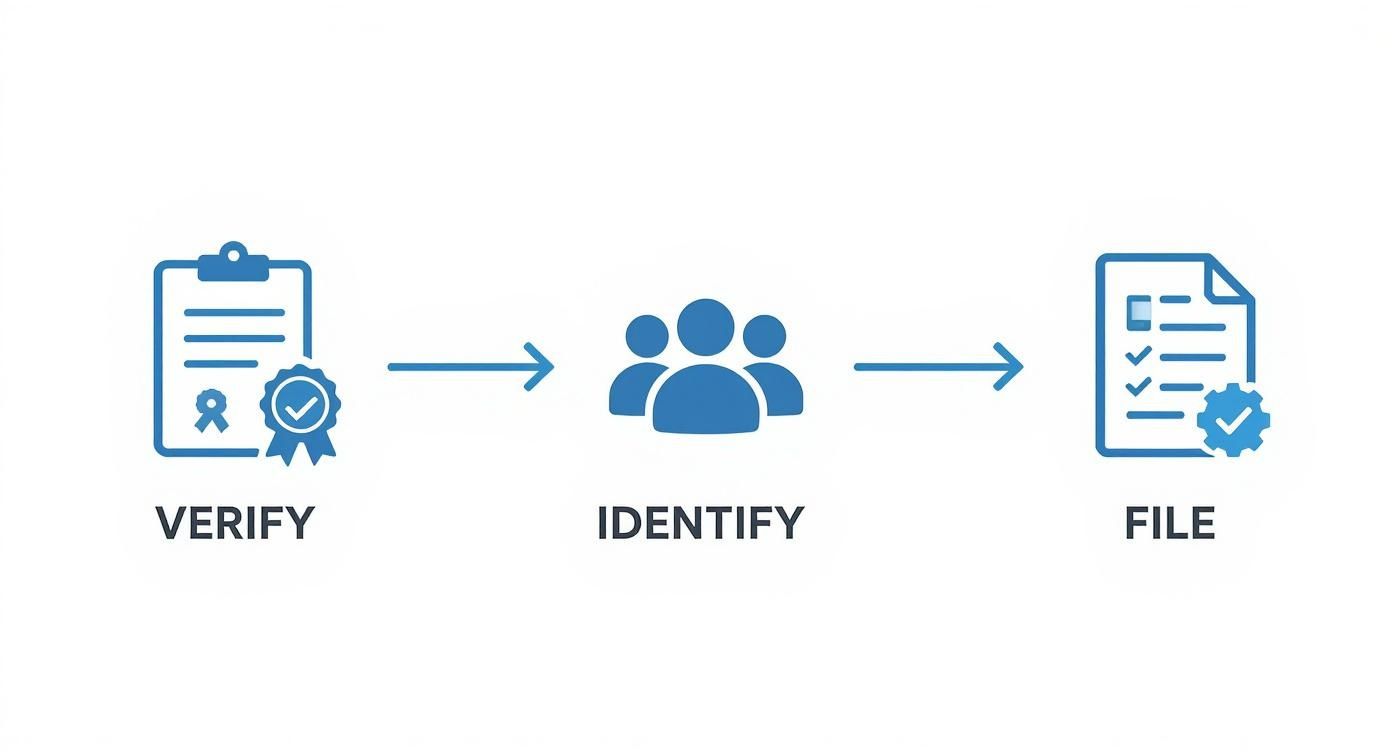
Understanding this journey is key, as it helps you pinpoint exactly where the delay occurred and build your "sufficient cause" argument around it.
The Interplay with the Limitation Act
Your application to set aside an abatement doesn't exist in a vacuum. It works hand-in-hand with Section 5 of the Limitation Act, 1963. This is the provision that gives courts the power to forgive delays in filing applications, provided the person can show—you guessed it—"sufficient cause" for not acting within the prescribed time.
This legal partnership is what makes reviving a suit possible. The court essentially reads Order 22 Rule 9 and Section 5 together, focusing on one main question: was the delay genuine? For a deeper dive into the nuts and bolts of this, check out our guide on mastering the condonation of delay application format.
Insights: Courts have consistently said that 'sufficient cause' should be interpreted liberally to ensure real justice is done. The ultimate goal is to decide cases on their merits, not to throw them out on procedural technicalities, especially when the delay wasn't intentional or in bad faith.
The numbers back this up. A look at Supreme Court data shows that between 2018 and 2023, the court decided 1,423 appeals where abatement was the core issue. An impressive 43% of these were allowed, and the suits were brought back to life. The success rate for these appeals actually went up from 38% in 2018 to 46% in 2023, showing a clear judicial trend towards accepting genuine 'sufficient cause' arguments. You can explore these Supreme Court trends on main.sci.gov.in for more details.
How Draft Bot Pro Strengthens Your Application
Putting together a convincing application to set aside an abatement is about more than just stating a reason. You need to back it up with evidence and, crucially, legal precedent. This is where a legal AI assistant can be a game-changer.
Draft Bot Pro can take the specific facts of your delay and instantly dig up relevant case law where similar reasons were accepted as "sufficient cause" by High Courts or even the Supreme Court. By weaving these precedents into your application, you turn a simple request into a powerful, legally-grounded argument. This dramatically boosts your chances of getting that door to your case reopened.
Abatement Vs Dismissal Understanding The Difference
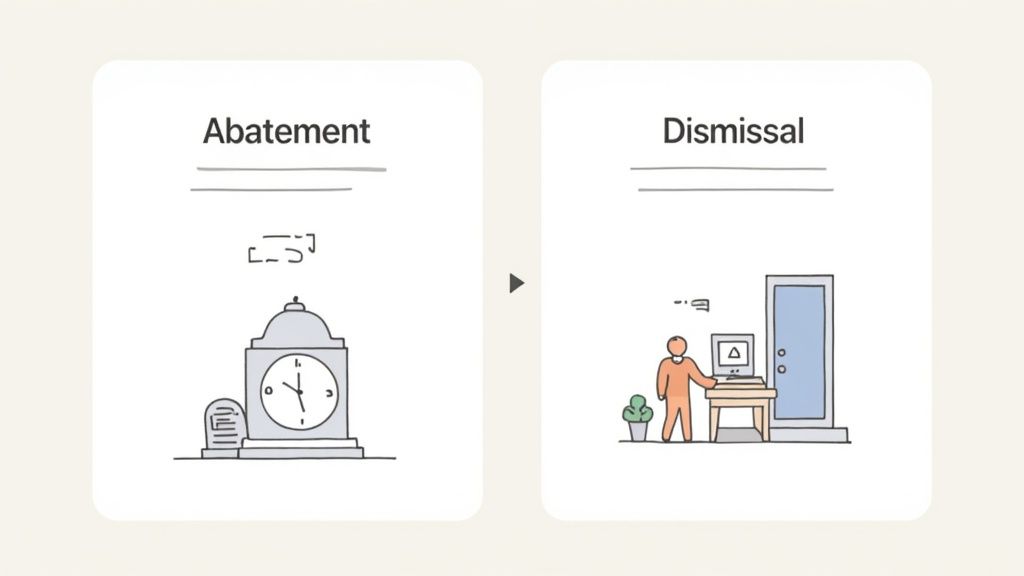
In civil litigation, every term has weight. Although both the abatement of suit and the dismissal of a suit bring proceedings to a standstill, they arise from very different triggers.
Abatement kicks in automatically—think of it as a legal ripcord—while dismissal is the court’s deliberate call to end a case.
The Nature Of The Action
Abatement springs from the law itself. For example, when a litigant dies and heirs aren’t substituted within 90 days, the suit quietly lapses by operation of law. No order, no fanfare—just a procedural pause.
On the other hand, dismissal is a conscious judicial decision. A judge might dismiss a case for non-prosecution, lack of evidence or jurisdictional issues. That requires a formal order, not merely the ticking of a deadline.
The Effect On Future Litigation
Here’s where strategy really matters. Under Order 22 Rule 9 CPC, once a suit has abated, filing a fresh claim on the same cause of action is strictly barred. Your only way back is an application to set aside the abatement, showing “sufficient cause” for the delay.
Dismissal doesn’t always carry such a final stamp. If a suit is thrown out for a curable technical defect, you might refile after fixing the problem. For a deeper dive into reviving proceedings, our guide on Order 9 Rule 13 CPC judgments offers practical insights.
Insights: After abatement, courts presume you’ve abandoned your claim. A dismissed suit, by contrast, often leaves the door ajar for fresh litigation.
Below is a side-by-side look at these crucial differences.
Comparison of Abatement and Dismissal
Basis of Difference | Abatement of Suit | Dismissal of Suit |
|---|---|---|
Cause | Automatic consequence of an event (e.g., death of a party). | A judicial order based on grounds like non-prosecution or default. |
Nature | Procedural; happens by operation of law. | Judicial; requires a specific court order. |
Remedy | Application to set aside the abatement under Order 22, Rule 9. | Appeal, review or fresh suit, depending on why the case was dismissed. |
Fresh Suit | A fresh suit on the same cause of action is barred. | A fresh suit may be permitted, depending on the nature of the dismissal. |
By lining up these points, you can quickly see how each route shapes your next move.
Navigating The Nuances With Draft Bot Pro
When you need to explain these subtleties to a client, Draft Bot Pro is a handy companion. It delivers context-specific definitions and pulls up the most relevant case law in seconds.
For example, you can:
Request precedents where courts have enforced the bar on fresh suits after abatement
Generate sample clauses for applications to set aside abatement under Order 22, Rule 9
Compare judicial reasoning in dismissal orders to spot refiling opportunities
Armed with these tools, you’ll advise with confidence and precision.
What Landmark Cases Teach Us About Abatement
The rule books give you the skeleton of the law, but it’s the court decisions that give it flesh and blood. The principles around the abatement of suit are a perfect example; they've been hammered out and polished over decades in courtrooms across India. When you dig into these landmark judgments, you find a clear and consistent message from the judiciary: substance always trumps procedure.
Time and again, courts lean towards getting to the real heart of a matter rather than letting a technicality kill the case. This really drives home the point that justice shouldn't be derailed by a procedural slip-up, especially one that happens because a party has passed away.
Who Exactly is a "Legal Representative"?
One of the first hurdles in an abatement situation is figuring out who counts as a "legal representative." The Supreme Court has thankfully given us some solid guidance here, making it clear that we need to think broadly. It's not just about direct heirs. It can be anyone who legally represents the deceased person's estate.
Take the case of Andhra Bank v. N. Sreenivasan. The Court decided that even "intermeddlers"—people who start managing the deceased's property without official authority—can be considered legal representatives just to keep the lawsuit going.
Insights: The term 'legal representative' is meant to be inclusive. The real test is simple: can this person properly look after the interests of the deceased's estate in court? The goal is to stop a case from failing on a minor technical point.
A Liberal View on "Sufficient Cause"
As we’ve touched on, bringing an abated suit back to life depends on showing "sufficient cause" for the delay. Landmark judgments have consistently pushed for a liberal and practical take on this phrase. Judges understand that people, especially when they're grieving, can face real-world problems that make hitting strict deadlines tough.
The famous case of Collector, Land Acquisition, Anantnag v. Mst. Katiji is a game-changer here. The Supreme Court laid out the ground rules, emphasising that the main objective is to achieve "substantial justice" and not get bogged down in hyper-technical details. This ruling has become the foundation for almost every application filed to set aside an abatement of suit.
This judicial flexibility is crucial. A Law Commission of India report (No. 268) revealed just how big of a problem this is, noting that abatement was a major cause of court delays. In fact, around 5.8% of civil cases disposed of between 2012 and 2016 were because of abatement, which often meant justice was denied. You can dive into the full details in the Law Commission's report on its website.
The Difference Between the Right to Sue and the Suit Itself
Another vital lesson from case law is the difference between the survival of the right to sue (the cause of action) and the survival of the lawsuit itself. It’s a subtle but important distinction.
Survival of Cause of Action: This is about whether the core legal claim can even exist after someone dies. For example, highly personal claims like defamation usually die with the person.
Survival of Action: This is about an existing lawsuit that has already been filed. Once a case is in court, its survival depends entirely on following the procedural steps in Order 22.
The Supreme Court has made it plain: if the cause of action survives, you can't just dismiss the suit when a party dies. It can only abate if the lawyers fail to substitute the legal heirs in time.
How Draft Bot Pro Helps with Precedent Analysis
Knowing these landmark judgments is one thing; using them effectively to build your case is another. This is where a legal AI assistant like Draft Bot Pro can be a massive help.
Instead of losing hours digging through databases for the right case law, you can just ask Draft Bot Pro to find and summarise the key rulings on the abatement of suit. It can instantly pull up judgments that have defined 'legal representative' or interpreted 'sufficient cause' in a situation just like yours. This lets you build powerful applications and arguments, all supported by solid judicial precedent, making sure you're always a step ahead.
Common Questions About Abatement Of Suit
Sorting through the finer points of abatement of suit often sparks a host of practical queries. Whether you're a veteran litigator or a law student, these clarifications can save you time and headaches in court.
What Happens If A Defendant Dies And The Right To Sue Does Not Survive
When a defendant passes away and the cause of action is purely personal, the lawsuit grinds to a halt. Take defamation, for instance—once the person is gone, the claim vanishes too.
In practice, the court simply notes the death and closes the file. No further hearings or written submissions can follow.
Can An Appeal Abate Just Like A Suit
Absolutely. Order 22 of the CPC treats an appeal as an extension of the original suit. If either party dies mid-appeal, their representatives must step in within 90 days.
If you miss that window, the appeal is deemed abated, echoing the procedure for regular suits. And yes, setting aside that abatement follows the familiar process.
Insights: Appellate proceedings don’t exist in isolation—they carry forward all the procedural safeguards and timelines of the first-instance suit. Understanding this continuity is crucial for managing long-running litigation effectively.
Is There A Different Abatement Procedure For Summary Suits
No, there isn’t. Even under Order 37 (summary suits), the same abatement rules apply. The clock still ticks 90 days for substitution of legal representatives.
So whether it’s a marathon trial or a fast-track summary suit, the deadline—and its consequences—are identical.
What Is The Role Of A Pleader When A Party Dies
Your pleader has more on their plate than drafting and arguing. Under Order 22 Rule 10A, they must notify the court as soon as they learn of a party’s death.
This official notice kicks off the substitution period. Missing it risks avoidable delays or even dismissal—so don’t let it slip through the cracks.
Tackling procedural nuances like abatement calls for quick access to case law, statutes and ready-to-use drafts. That’s where Draft Bot Pro comes in. It summarises relevant rulings, offers step-by-step guides for substitution applications, and even drafts your pleadings in seconds.
Explore how Draft Bot Pro can streamline your workflow and keep you ahead of every deadline.
Frequently Asked Questions
Below is a snapshot of the most common queries on abatement of suit, with clear, concise answers for easy reference.
Question | Answer |
|---|---|
What triggers automatic abatement of a suit? | The death of a party whose rights are purely personal, with no surviving cause of action. |
How long do you have to substitute a deceased party’s representative? | 90 days from the date the court is notified. |
Does an appeal face abatement under the same rules? | Yes—Order 22 applies identically to appeals as it does to original suits. |
Are summary suits governed by unique abatement provisions? | No, summary suits under Order 37 adhere to the same abatement and substitution rules. |
Who must inform the court when a party dies, and when? | The pleader must notify the court immediately upon learning of the death, as per Order 22 Rule 10A. |
With these FAQs at your fingertips, you can navigate abatement issues with confidence and clarity.
