
Top Vicarious Liability Cases Shaping Indian Law 2025

Vicarious liability, the legal doctrine that holds an employer responsible for the wrongful acts of an employee, is a cornerstone of tort law. This principle, rooted in the Latin maxim qui facit per alium facit per se (he who acts through another does the act himself), is deceptively simple in theory but complex in application. The central question often revolves around whether an employee was acting "within the course of employment" when the tort occurred. Understanding the nuances of this doctrine is crucial for legal practitioners, as it dictates where accountability lies in a wide array of civil disputes.
This article dissects seven landmark vicarious liability cases that have shaped and clarified the boundaries of employer responsibility. For each case, we provide a concise breakdown of the facts, the court's reasoning, and the ultimate outcome. Beyond a simple summary, we offer strategic analysis and actionable insights to help you apply these legal principles in practice. For legal professionals navigating complex compliance frameworks, understanding employer duties is paramount. Beyond common law torts, employers in the healthcare sector must navigate complex legal landscapes. A crucial aspect of employer responsibility involves ensuring strict adherence to regulations like HIPAA. For insights into maintaining proper HIPAA compliant data transfer, A Guide to HIPAA Compliant Data Transfer from PYCAD provides valuable guidance.
Insights: Legal AI tools like Draft Bot Pro can accelerate case research by identifying relevant precedents and summarising judicial reasoning, allowing you to quickly grasp the core principles from pivotal vicarious liability cases like those covered here.
1. Holley v. Mixed Martial Arts Holdings, LLC (2010)
This case significantly broadened the application of vicarious liability, extending it beyond the conventional employer-employee framework to include independent contractors in the high-stakes world of combat sports. The court's decision underscored that the degree of control an organisation exerts over an individual's work is more critical than their official employment status.
In Holley v. Mixed Martial Arts Holdings, LLC, the court found that despite fighters being classified as independent contractors, the promotion company exercised substantial control over their actions within sanctioned events. This control included dictating fight rules, matchmaking, and event conduct, effectively creating a principal-agent relationship for liability purposes. Consequently, the promotion was held vicariously liable for injuries one fighter inflicted upon another, challenging the traditional legal shield provided by independent contractor agreements. This ruling is a crucial example in the study of vicarious liability cases.

Strategic Analysis and Insights
The core strategy here was to pierce the corporate veil created by the "independent contractor" label. The plaintiff's legal team successfully argued that the substance of the relationship, defined by the promotion's pervasive control, mattered more than its form.
Strategic Insight: The key to establishing vicarious liability in non-traditional employment scenarios is to meticulously document the principal's level of control. Focus on operational directives, behavioural standards, and financial dependencies that mimic an employer-employee dynamic.
Actionable Takeaways for Legal Professionals
For legal teams, this case serves as a vital precedent. It highlights the importance of scrutinising the actual power dynamics at play, regardless of contractual classifications.
For Plaintiffs: When building a case, gather evidence of control. This includes contracts, rulebooks, codes of conduct, and communication records that demonstrate the defendant's authority over the contractor's work.
For Defendants: Organisations using independent contractors must carefully structure agreements to minimise control over the "how" of the work performed, focusing instead on the final outcome to mitigate vicarious liability risks.
How Draft Bot Pro Can Help
Insights: Legal AI tools like Draft Bot Pro can be invaluable in these complex vicarious liability cases. It can rapidly analyse thousands of documents, such as contracts and internal communications, to identify patterns of control and authority that are crucial for establishing or refuting a claim. This allows legal teams to quickly build a fact-based argument grounded in the principles established by cases like Holley.
2. Lisa M. v. Henry Mayo Newhall Memorial Hospital (1995)
This landmark case from the California Supreme Court critically redefined the scope of an employer's liability for the intentional torts of its employees, particularly in sensitive contexts like healthcare. The ruling articulated a nuanced test for determining when an employee's wrongful act, even a criminal one, falls within the scope of their employment for liability purposes.
In Lisa M. v. Henry Mayo Newhall Memorial Hospital, the court addressed a case involving a sexual assault committed by a hospital technician during an ultrasound procedure. The court established that for vicarious liability to apply, the employee's misconduct must be a generally foreseeable outgrowth of their job duties. It clarified that foreseeability meant the assault was not so "startling or unusual" that it would be unfair to hold the employer responsible. The hospital was ultimately not found liable because the technician's actions were deemed an independent, self-serving pursuit, not a risk inherent to the job itself. This decision is a cornerstone in the study of vicarious liability cases.

Strategic Analysis and Insights
The core legal strategy revolved around defining the boundaries of "scope of employment." The defense successfully argued that the employee's criminal act was a substantial deviation from his duties, motivated purely by personal gratification and not in any way serving the employer's interests. This distinguished the act from the job's inherent risks.
Strategic Insight: Establishing or refuting vicarious liability for intentional torts hinges on demonstrating the connection, or lack thereof, between the wrongful act and the employee's designated job functions. The argument must focus on whether the employment itself created the risk that the harm would occur.
Actionable Takeaways for Legal Professionals
This case provides a crucial framework for analysing employer liability for employee misconduct. It underscores the need for a deep dive into the nature of the job and the specific context of the wrongful act. For a thorough understanding of procedural fairness in such employment matters, legal professionals can explore the complete guide to domestic enquiry in labour law.
For Plaintiffs: To succeed, legal teams must prove that the employee's actions were a foreseeable risk of the job. This involves showing how the employer's enterprise created the opportunity and motivation for the misconduct.
For Defendants: The key is to demonstrate that the employee's act was an independent venture, completely disconnected from their work responsibilities. Emphasise the personal nature of the motive and the substantial departure from expected conduct.
How Draft Bot Pro Can Help
Insights: In vicarious liability cases like Lisa M., a Legal AI like Draft Bot Pro can be instrumental. It can swiftly analyse HR records, job descriptions, and internal incident reports to identify patterns of behaviour and contextual factors. This helps legal teams build a strong, evidence-based argument about whether an employee's actions were a foreseeable part of their employment, significantly streamlining case preparation.
3. Nancy Dunkle v. Ramada Development Co. (1998)
This pivotal case from Pennsylvania significantly expanded the scope of vicarious liability for employers, holding them responsible for intentional criminal acts committed by their employees. The court's decision in this matter established that a business, in this case a hotel, has a non-delegable duty to protect its guests from foreseeable harm, including criminal assaults by its own staff.
In Nancy Dunkle v. Ramada Development Co., a hotel employee assaulted a guest. The court determined that the hotel could be held vicariously liable because the employee's very presence and access to the guest were a direct result of their employment. The ruling affirmed that when an employee's actions, even criminal ones, are foreseeable and related to the employment context, the employer's duty of care is breached. This case is a cornerstone in the evolution of vicarious liability cases, extending the doctrine beyond mere negligence to intentional torts and criminal conduct.
Strategic Analysis and Insights
The core legal strategy was to frame the employee's criminal act not as a deviation from employment, but as a foreseeable risk created by the employment itself. The plaintiff successfully argued that the hotel placed the employee in a position of trust and access, and this created a special duty to protect guests from the abuse of that position.
Strategic Insight: Establishing vicarious liability for criminal acts requires shifting the focus from the employee's motive to the employer's failure to prevent a foreseeable risk. The key is to demonstrate that the employment context enabled the criminal act.
Actionable Takeaways for Legal Professionals
This ruling underscores the importance of an employer's duty of care, especially in industries involving public trust and safety, like hospitality.
For Plaintiffs: Focus on the employer's negligence in hiring, supervision, or retention. Argue that the employer knew or should have known about the employee's potential for harm, making the criminal act a foreseeable consequence of their employment.
For Defendants: Implement rigorous background checks, robust training on conduct, and clear supervision protocols. Demonstrating proactive measures to ensure guest safety can be a powerful defence against claims of foreseeability and vicarious liability.
How Draft Bot Pro Can Help
Insights: In vicarious liability cases involving criminal acts, Draft Bot Pro can be instrumental in building a narrative of foreseeability. The AI can analyse HR records, internal incident reports, and employee communications to uncover patterns of behaviour or prior complaints that an employer may have overlooked. This evidence is critical for arguing that the employer was on notice of the potential danger, strengthening the claim for vicarious liability.
4. Doe v. Cahill (2007)
This pivotal case from the Delaware Supreme Court tackled vicarious liability in the burgeoning digital age, specifically concerning online speech and defamation. The ruling established critical standards for when websites could be compelled to unmask anonymous users, thereby touching upon the liability of platforms for third-party content. It set a precedent for balancing free speech against the right to seek redress for defamatory statements online.
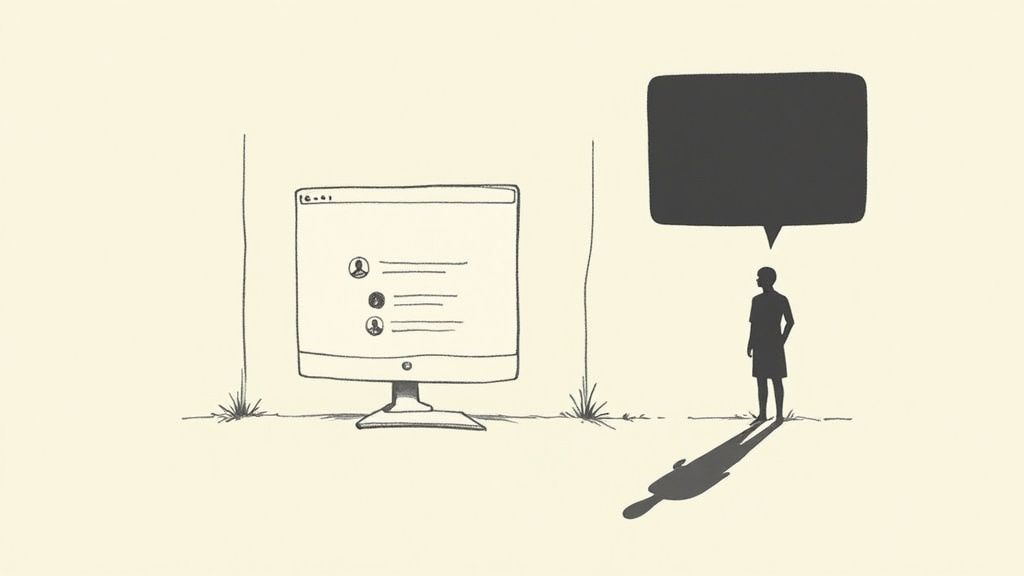
In Doe v. Cahill, a city councilman sued an anonymous blogger for defamatory comments. To proceed with the lawsuit, the plaintiff needed to identify the defendant, which required compelling the website's host to release the user's information. The court ruled that a plaintiff must first provide sufficient evidence to support their defamation claim before an anonymous speaker's identity can be revealed. This created a higher-than-normal evidentiary standard, indirectly shaping the landscape of platform liability by protecting anonymous speech and making it harder to hold platforms vicariously responsible without a strong initial case. This ruling remains a cornerstone in the study of vicarious liability cases online.
Strategic Analysis and Insights
The legal strategy here centred on protecting anonymous speech under the First Amendment. The defence argued that allowing easy discovery of anonymous users would create a "chilling effect" on online discourse. By forcing plaintiffs to substantiate their defamation claims first, the court created a procedural safeguard that influences how vicarious liability is approached for online intermediaries.
Strategic Insight: In digital defamation cases involving anonymous actors, the focus shifts from direct liability to procedural hurdles. The core strategy is to challenge the plaintiff's ability to even identify the defendant, using First Amendment protections as a shield against unsubstantiated claims.
Actionable Takeaways for Legal Professionals
This case offers a roadmap for handling online defamation and potential platform liability. The principles established are crucial for both plaintiffs seeking to unmask anonymous detractors and defendants (platforms) aiming to protect user privacy and limit their own exposure. Thorough preliminary work is non-negotiable, a skill sharpened by understanding how to do legal research.
For Plaintiffs: Before filing a suit, ensure you have a strong, evidence-backed defamation claim that can survive a summary judgment standard. This is now a prerequisite to unmasking an anonymous defendant.
For Defendants: Platforms should establish clear policies on how they handle subpoenas for user data, referencing the Cahill standard. This provides a legal basis for resisting requests that do not meet the evidentiary threshold, thereby mitigating liability risks.
How Draft Bot Pro Can Help
Insights: In vicarious liability cases involving online content, legal AI like Draft Bot Pro proves indispensable. It can efficiently sift through vast amounts of user-generated content, terms of service, and case law to help legal teams assess whether a defamation claim meets the Cahill standard. By rapidly identifying precedents and analysing the strength of evidence, Draft Bot Pro empowers lawyers to build a robust case from the outset, whether for the plaintiff or the platform.
5. Majestic Realty Associates, Inc. v. Timberlane Regional School District (1980)
This landmark New Hampshire case was pivotal in cementing the principle of vicarious liability within educational institutions. The court's decision affirmed that a school district, as an employer, could be held responsible for the negligent and even intentional wrongful acts of its employees, such as teachers and administrators, when those acts occur within the scope of their employment.
In Majestic Realty Associates, Inc. v. Timberlane Regional School District, the court grappled with the extent of institutional responsibility for employee misconduct affecting students and third parties. The ruling established that the "scope of employment" could be broadly interpreted, holding the school district vicariously liable for actions that were a foreseeable part of the employment context. This decision significantly eroded the doctrine of sovereign immunity for municipal entities in such scenarios, making it one of the most critical vicarious liability cases for public institution accountability.
Strategic Analysis and Insights
The core legal strategy involved shifting the focus from the individual employee's misconduct to the institution's overarching duty of care and control. The plaintiff successfully argued that the school district placed its employees in a position of authority and trust, making it foreseeable that a breach of that trust could cause harm. Therefore, the institution bore the ultimate financial responsibility.
Strategic Insight: To establish institutional liability, the argument must link the employee's tortious act directly to the duties and authority conferred by the employer. Demonstrating that the act was a distorted or improper execution of an authorised task is more effective than framing it as a purely personal venture.
Actionable Takeaways for Legal Professionals
This case offers a clear roadmap for litigating against public institutions. It underscores that an employment relationship itself creates a non-delegable duty to prevent foreseeable harm.
For Plaintiffs: Focus discovery on the school district's hiring practices, supervision policies, and any prior knowledge of an employee's potential for misconduct. Evidence of inadequate oversight can strengthen the "scope of employment" argument.
For Defendants: School districts and other public bodies must implement and rigorously enforce strict codes of conduct, training programmes, and supervisory protocols. Clear documentation of these measures is essential to argue that an employee's actions fell outside the scope of their employment. This case and its principles echo through many other areas, as seen in various landmark tort court cases.
How Draft Bot Pro Can Help
Insights: In vicarious liability cases involving institutions, Draft Bot Pro can be instrumental. The AI can efficiently analyse vast amounts of documentation, such as school board policies, employee handbooks, and incident reports, to identify systemic failures in supervision or policy enforcement. This allows legal professionals to build a compelling case that the employee's misconduct was a foreseeable consequence of the institution's negligence, thus solidifying the grounds for vicarious liability.
6. Sommer v. Federal Signal Corp. (1984)
This case significantly broadened the scope of vicarious liability beyond mere negligence, extending it to cover an employee's intentional and even criminal acts. The Illinois appellate court's decision in this matter established that an employer could be held liable for an employee’s assault on a customer if the act was committed within the course and scope of employment.
In Sommer v. Federal Signal Corp., an employee of a manufacturing company assaulted a customer. The court found that the employer could be held vicariously liable because the employee's actions, though criminal, were sufficiently connected to their employment duties. This ruling challenged the traditional notion that intentional torts automatically fall outside the scope of employment, setting a precedent that the nature of the employee’s job and the context of the act are critical factors. This is a foundational example in the study of vicarious liability cases.
Strategic Analysis and Insights
The core legal strategy was to link the employee's intentional tort directly to the employer's business interests and the employee's designated responsibilities. The plaintiff's counsel successfully argued that the confrontation leading to the assault arose from a dispute directly related to the employee's job, thereby keeping the action within the scope of employment.
Strategic Insight: To establish vicarious liability for an intentional tort, the argument must demonstrate that the employee's act, however misguided, was committed in furtherance of the employer's business or was a foreseeable consequence of the job's nature.
Actionable Takeaways for Legal Professionals
This case serves as a crucial reminder for legal teams that the "scope of employment" is a fluid concept that can encompass more than just prescribed duties. It highlights the need to assess the foreseeability of an employee's harmful actions.
For Plaintiffs: Focus on establishing a clear nexus between the employee’s job and the intentional act. Gather evidence showing the dispute originated from work-related matters, making the subsequent tort a part of the same transaction.
For Defendants: Organisations must implement robust hiring, training, and supervision protocols, especially for roles involving public interaction. Clear policies defining acceptable conduct can help argue that an intentional tort was a significant deviation from employment duties, thus mitigating vicarious liability risks.
How Draft Bot Pro Can Help
Insights: In complex vicarious liability cases involving intentional torts, legal AI like Draft Bot Pro can be instrumental. The tool can analyse employee handbooks, incident reports, and internal communications to identify patterns of behaviour or lack of supervision that could be key to proving or disproving that an act was foreseeable or within the scope of employment. This allows legal professionals to build a more nuanced and evidence-backed argument.
7. Ira S. Bushey & Sons, Inc. v. United States (1968)
This landmark United States federal case refined the "scope of employment" doctrine, establishing that an employer could be held vicariously liable for an employee's actions even if they were not directly serving the employer's interests at that moment. The court's decision hinged on the foreseeability of the employee's misconduct, given the nature of their employment.
In Ira S. Bushey & Sons, Inc. v. United States, a drunken Coast Guard seaman returned to his ship, which was in a drydock owned by the plaintiff, and opened valves that flooded and damaged the dock. The court held the U.S. government vicariously liable, reasoning that the seaman's presence on the ship was a direct result of his employment. The court introduced a foreseeability test, arguing it was foreseeable that crewmen, confined to a ship, might engage in reckless behaviour that could cause damage. This case is a pivotal study in the evolution of vicarious liability cases.
Strategic Analysis and Insights
The plaintiff's strategy was to shift the legal focus from the employee's motive (which was purely personal) to the broader context of the employment itself. They successfully argued that the risk of such an incident was characteristic of the enterprise, and therefore the employer should bear the cost as a part of doing business.
Strategic Insight: Vicarious liability can be established by demonstrating that the employee's wrongful act, while not authorised, was a foreseeable risk created by the nature of the employment. The key is to link the risk to the enterprise, not just the employee's personal intent.
Actionable Takeaways for Legal Professionals
This case serves as a powerful reminder that the "scope of employment" is not a rigid boundary but a flexible concept that can be expanded by arguments of foreseeability and enterprise risk.
For Plaintiffs: When an employee's actions seem outside their direct duties, analyse the overall employment environment. Build an argument that the employer created a situation where such misconduct, however misguided, was a foreseeable consequence.
For Defendants: Employers must conduct thorough risk assessments related to employee conduct, especially in environments where employees have access to high-value or dangerous equipment. Implementing strict protocols and supervision can help mitigate risks and defend against claims of foreseeability.
How Draft Bot Pro Can Help
Insights: In complex vicarious liability cases like this, Draft Bot Pro can assist legal teams by analysing case law to find precedents that support a broader, foreseeability-based interpretation of "scope of employment." The AI can scan legal databases to identify judgments where courts have imputed liability based on enterprise risk, helping lawyers build a more nuanced and persuasive argument that goes beyond traditional master-servant principles.
7-Case Vicarious Liability Comparison
Case | Jurisdiction (Year) | Complexity 🔄 | Resource Requirements ⚡ | Expected Outcomes ⭐📊 | Ideal Use Cases & Key Advantages 💡 |
|---|---|---|---|---|---|
Holley v. Mixed Martial Arts Holdings, LLC | Florida (2010) | High — control-focused analysis; non‑delegable duty issues | Elevated — higher insurance and defense costs for promoters | ⭐⭐ 📊 Expands vicarious liability to independent contractors in sanctioned events; increased consumer protection | 💡 Combat-sport promoters; enforces safety obligations and promoter accountability |
Lisa M. v. Henry Mayo Newhall Memorial Hospital | California Supreme Court (1995) | Moderate‑High — apparent agency and reasonable‑reliance inquiry | High — supervision, screening, and potential liability exposure for hospitals | ⭐⭐⭐ 📊 Strong patient protections; hospitals liable based on public perception of agency | 💡 Healthcare settings where patients rely on institutional authority; improves screening/supervision |
Nancy Dunkle v. Ramada Development Co. | Pennsylvania (1998) | Moderate — foreseeability and guest‑protection duty analysis | Moderate‑High — security measures, background checks, insurance | ⭐⭐ 📊 Establishes duty to protect guests; liability for foreseeable criminal acts by staff | 💡 Hospitality industry; incentivizes employee vetting and security protocols |
Doe v. Cahill | Delaware Supreme Court (2007) | High — digital context, Section 230 interplay, active vs passive hosting | Variable — content moderation systems vs. legal defense costs | ⭐⭐ 📊 Clarifies platform responsibility for user content; influences moderation practices | 💡 Online platforms and forums; useful when assessing platform involvement in defamatory content |
Majestic Realty Associates, Inc. v. Timberlane RSD | New Hampshire (1980) | Moderate — scope of employment in educational settings | High — hiring, supervision, and potential district liability costs | ⭐⭐ 📊 Institutional accountability for student safety; precedent for school liability | 💡 K–12 and higher education; promotes rigorous hiring and oversight policies |
Sommer v. Federal Signal Corp. | Illinois Appellate Court (1984) | Moderate‑High — intentional torts within scope-of‑employment test | High — training, screening, increased employer liability exposure | ⭐⭐ 📊 Extends vicarious liability to employee intentional misconduct related to duties | 💡 Employers in customer‑facing industries; provides victim recourse against solvent employers |
Ira S. Bushey & Sons, Inc. v. United States | 2d Cir. (1968) | High — temporal and spatial nexus test; FTCA federal context | High — government exposure to claims, litigation and settlement costs | ⭐⭐ 📊 Broadens federal vicarious liability; flexible nexus test for course‑of‑employment | 💡 Federal employer cases under FTCA; applies when conduct is time/place‑linked to employment |
Synthesising the Principles: Your Strategic Advantage in Legal Practice
The landmark vicarious liability cases we have explored, from Ira S. Bushey & Sons to Lisa M. v. Henry Mayo, paint a complex and evolving picture of employer responsibility. Moving beyond mere recitation of legal doctrine, a strategic analysis reveals a consistent theme: the courts are intensely focused on the nexus between the employee's wrongful act and the nature of their employment. Mastering this area of law is not just about knowing the rules; it is about understanding the narrative the courts are willing to accept.
A critical takeaway is that foreseeability is often the linchpin. Was the employee's misconduct a foreseeable risk of the business enterprise? The answer to this question frequently determines the outcome. Legal practitioners must therefore shift their focus from a rigid "scope of employment" test to a more fluid, risk-based analysis. This requires a deep dive into the specific duties, environment, and inherent risks of the job in question.
Actionable Insights for Your Practice
To translate these principles into a tangible advantage, consider the following strategic applications:
Risk-Centric Case Framing: When building your arguments, frame the employee's actions not just as a departure from their duties, but as a direct, albeit twisted, manifestation of the risks inherent in the employer's business. This approach proved decisive in cases where the connection seemed tenuous at first glance.
Evidence Gathering with Precision: Focus discovery on internal policies, training materials, and past incident reports. These documents are goldmines for establishing what the employer considered foreseeable risks and the adequacy of their preventative measures. Insights: Draft Bot Pro can accelerate this process by scanning large document sets to flag relevant policies and incident patterns, saving valuable research time.
Expert Witness Utilisation: In complex cases, leveraging an expert can be pivotal in establishing the industry standards for risk management and supervision. Properly briefing your witness is essential; ensuring they understand their obligations under the Expert Witness Code of Conduct is a non-negotiable step toward building a credible and persuasive case.
Mastering Vicarious Liability for Future Success
Ultimately, the study of these vicarious liability cases demonstrates that success hinges on a nuanced, fact-intensive approach. A generic argument will falter. The true strategic advantage lies in your ability to meticulously connect the employee's tortious act to the employer's enterprise, creating a compelling and logically sound narrative for the court. By adopting this analytical framework, you transform a complex legal doctrine into a powerful tool in your legal arsenal.
Ready to elevate your legal drafting and case analysis? Draft Bot Pro harnesses advanced AI to help you synthesise precedents, identify critical arguments in vicarious liability cases, and craft precise legal documents in a fraction of the time. Visit Draft Bot Pro to discover how you can gain a competitive edge in your practice.
